Foundational Practices
An objective exploration of cooking methods, meal composition, and lifestyle factors as they relate to nutritional well-being.
Understanding Diverse Cooking Techniques
The method by which food is prepared has a direct bearing on its nutritional profile. Heat, water, and mechanical processing each alter the structure of food in ways that affect the availability and concentration of its constituent nutrients.
This section examines the principal cooking methods discussed in culinary nutrition literature, contextualising their effects on nutrient retention and food composition without prescribing specific approaches.
Significance of Preparation Method
Water-soluble vitamins, particularly vitamin C and members of the B vitamin group, are susceptible to degradation through prolonged heat exposure and leaching into cooking water. Fat-soluble vitamins (A, D, E, K) are generally more stable under heat but require dietary fat for absorption. Certain cooking processes also improve the bioavailability of some nutrients, demonstrating that the relationship between cooking and nutrition is not simply one of nutrient loss.
| Technique | Description | Nutrient Considerations | Common Applications |
|---|---|---|---|
| Steaming | Food is cooked by water vapour at or above 100°C, without direct contact with water. | Generally recognised as one of the methods that best preserves water-soluble vitamins, as nutrients are not leached into cooking water. | Vegetables, fish, dumplings, certain grains. |
| Boiling | Food is submerged in water at 100°C. One of the most widely used cooking methods globally. | Water-soluble vitamins may leach into the cooking liquid. Nutrient retention is improved when cooking time is minimised. | Grains, legumes, root vegetables, eggs. |
| Roasting / Baking | Dry heat is applied in an enclosed environment (oven), typically between 150°C and 220°C. | Maillard reaction creates complex flavour compounds. Fat-soluble vitamins are generally stable. Moisture loss concentrates nutrients by mass. | Root vegetables, whole grains, poultry, legumes. |
| Sautéing / Stir-frying | High-heat, short-duration cooking in a small amount of fat. Food is kept in motion to prevent burning. | Short cooking time limits vitamin degradation. The presence of fat enhances absorption of fat-soluble nutrients from vegetables. | Vegetables, tofu, lean proteins, aromatics. |
| Poaching | Gentle cooking in liquid maintained below simmering (70–80°C). | Lower temperatures reduce heat-related nutrient degradation. Some water-soluble vitamins may still leach into the cooking liquid. | Fish, eggs, fruit, poultry. |
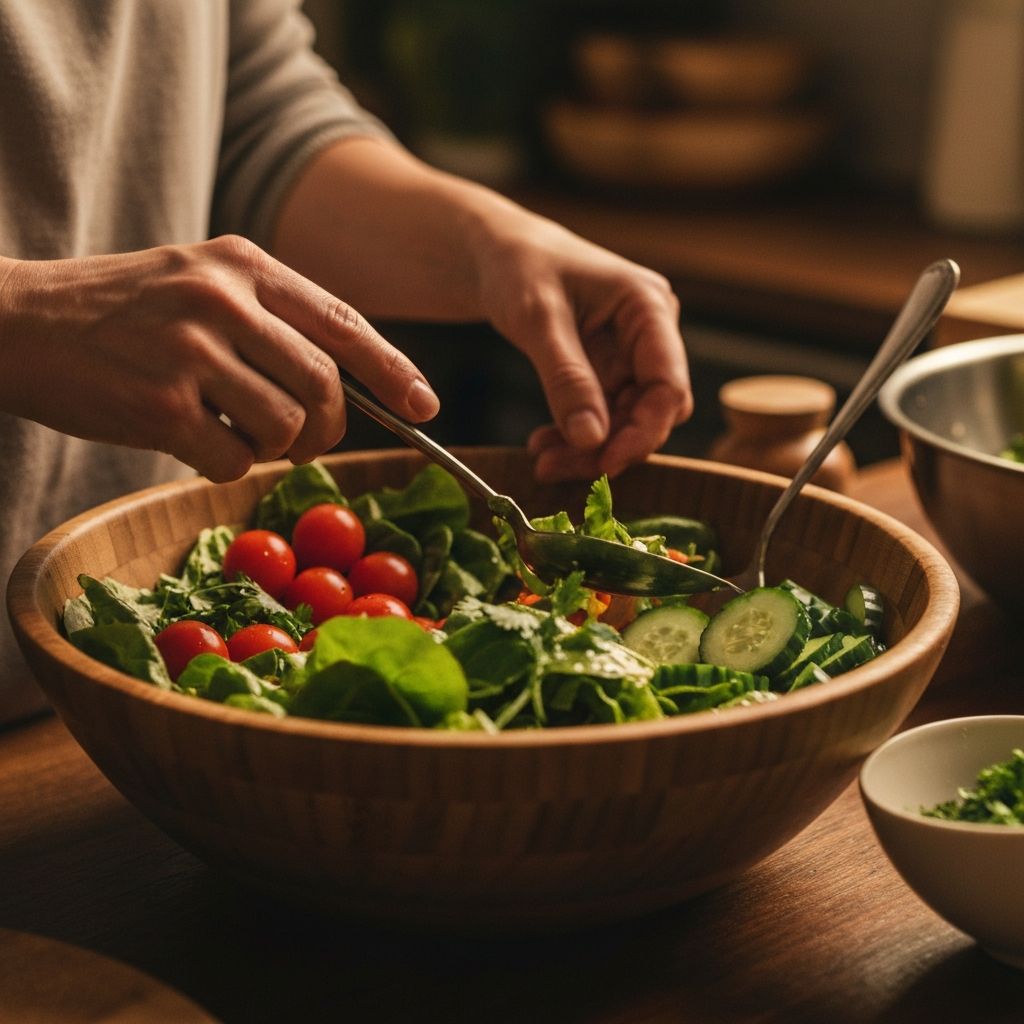
| Raw Preparation | Food is consumed without heat application. May involve slicing, grating, juicing, or soaking. | Preserves heat-sensitive vitamins and naturally occurring enzymes. Some nutrients, however, become more bioavailable through cooking. | Salads, certain fruits and vegetables, fermented preparations. |
| Fermentation | Microorganisms transform food substrates over time, producing acids, alcohols, or gases as by-products. | Can increase the bioavailability of certain minerals by reducing phytic acid. Introduces or preserves live microbial cultures in food. | Yoghurt, kefir, kimchi, sauerkraut, sourdough, miso. |

The Structure of a Balanced Meal
Meal composition refers to the proportional arrangement of different food components within a single eating occasion. Nutritional guidance frameworks from various international public health organisations describe the general principle of including diverse food groups within meals as a structural feature of balanced eating.
Proportional Thinking
A commonly referenced heuristic in nutritional education divides a notional eating occasion into sections: a substantial portion allocated to non-starchy vegetables and fruits, a portion to whole grain or starchy sources of carbohydrate, and a portion to protein-containing foods. Fats are understood as distributed across all categories rather than as a separate portion.
Meal Frequency Context
Nutritional literature does not prescribe a single optimal meal frequency applicable to all individuals. Patterns of eating, including the distribution of food intake across the day, are explored in research as variables that interact with many individual factors, including metabolic function, lifestyle, and cultural context.
Understanding Food Labels
Food labelling systems, mandated by food regulatory authorities in most countries, provide standardised information about the nutritional content of packaged foods. Understanding how to interpret serving sizes, energy values, macronutrient quantities, and ingredient lists is a practical literacy skill discussed in consumer nutrition education.
The Role of Physical Activity in a Balanced Lifestyle
Physical activity and nutritional patterns are discussed together within the broader framework of lifestyle and well-being in public health and nutritional science literature. The relationship between movement and nutrition is understood as bidirectional: physical activity influences energy requirements and nutrient utilisation, while dietary composition affects the experience and capacity for physical activity.
General Descriptions in Research
Public health organisations, including the World Health Organization, describe physical activity as a component of general well-being alongside adequate nutrition. Guidelines typically distinguish between different intensity levels of movement — such as gentle, moderate, and vigorous activity — without prescribing specific regimens for individuals.
Nutrient Demands and Activity
Regular movement of any kind is associated in nutritional research with altered macronutrient and micronutrient utilisation patterns. Carbohydrates serve as a readily accessible fuel source; proteins are involved in structural maintenance of muscle tissue; hydration requirements increase relative to sweat rate and environmental temperature. These relationships are documented observations in exercise nutrition research, not prescriptive guidelines.

Core Concepts in Nutritional Practice
The following framework presents key concepts discussed within the nutritional science field as they relate to everyday eating patterns.
Dietary Variety
The principle that consuming a wide range of foods from different categories tends to deliver a broader spectrum of nutrients than reliance on a limited number of food sources.
Seasonal Eating
The practice of aligning food choices with the natural harvest cycles of produce. Discussed in nutritional and sustainability literature for its potential to support both nutritional diversity and local food systems.
Minimally Processed Foods
Foods that have undergone limited industrial processing and retain a high proportion of their original composition. Nutritional literature generally describes these as preserving a greater range of natural nutrients compared to heavily processed alternatives.
Energy Balance
The relationship between energy consumed through food and energy expended through metabolism and physical activity. A fundamental concept in nutritional science, though complex in its individual application.
Dietary Patterns
The holistic study of habitual food consumption over time, as distinct from analysis of individual foods or nutrients. Research in this area examines long-term trends rather than the properties of isolated dietary components.
Food Literacy
The cluster of knowledge, skills, and competencies required to plan, select, prepare, and consume food in a way that is consistent with nutritional principles. Includes the ability to interpret food labelling and understand nutritional information.